What Does Wife On Board Mean On A Cruise Ship?
The phrase on the cabin door is a joke, an identity marker and an invitation to talk, all at once. Here is what it means, where it sits in cruise culture and which sailings it travels on.
This answer sits in Questions Answered, the hub for short and long cruise questions from door-sign folklore to booking logistics.
Quick Facts
| Fact | Detail |
|---|---|
| Phrase | "Wife on board", a play on maritime warning call-outs, used as a cabin-door sign |
| Official status | None; no cruise line publishes a rule or fee for it |
| Where it appears | Passenger-decorated cabin doors, most densely on LGBTQ+ charter and group sailings |
| Function | Identifies a couple, signals friendliness, invites corridor conversation |
| Related door signs | Rubber ducks, pink flamingos and other tokens documented across charter culture |
| Operators sailing chartered ships | Atlantis Events, VACAYA, Olivia Travel and others, 90 charter and group sailings listed |
| Charter price range | Atlantis interiors from $1,199; VACAYA from $3,719; Out Adventures up to $22,585 |
| Sold-out pressure | 29 of the 90 listed sailings show sold out or waitlist |
What Does Wife On Board Mean On A Cruise Ship?
On a cruise ship, a "wife on board" sign is a playful door decoration riffing on the serious maritime call "man overboard," announcing that a couple is sailing together and one partner's wife is aboard. On LGBTQ+ charters it doubles as a marker of both relationship and festive mood. It is passenger culture, not a cruise-line product.
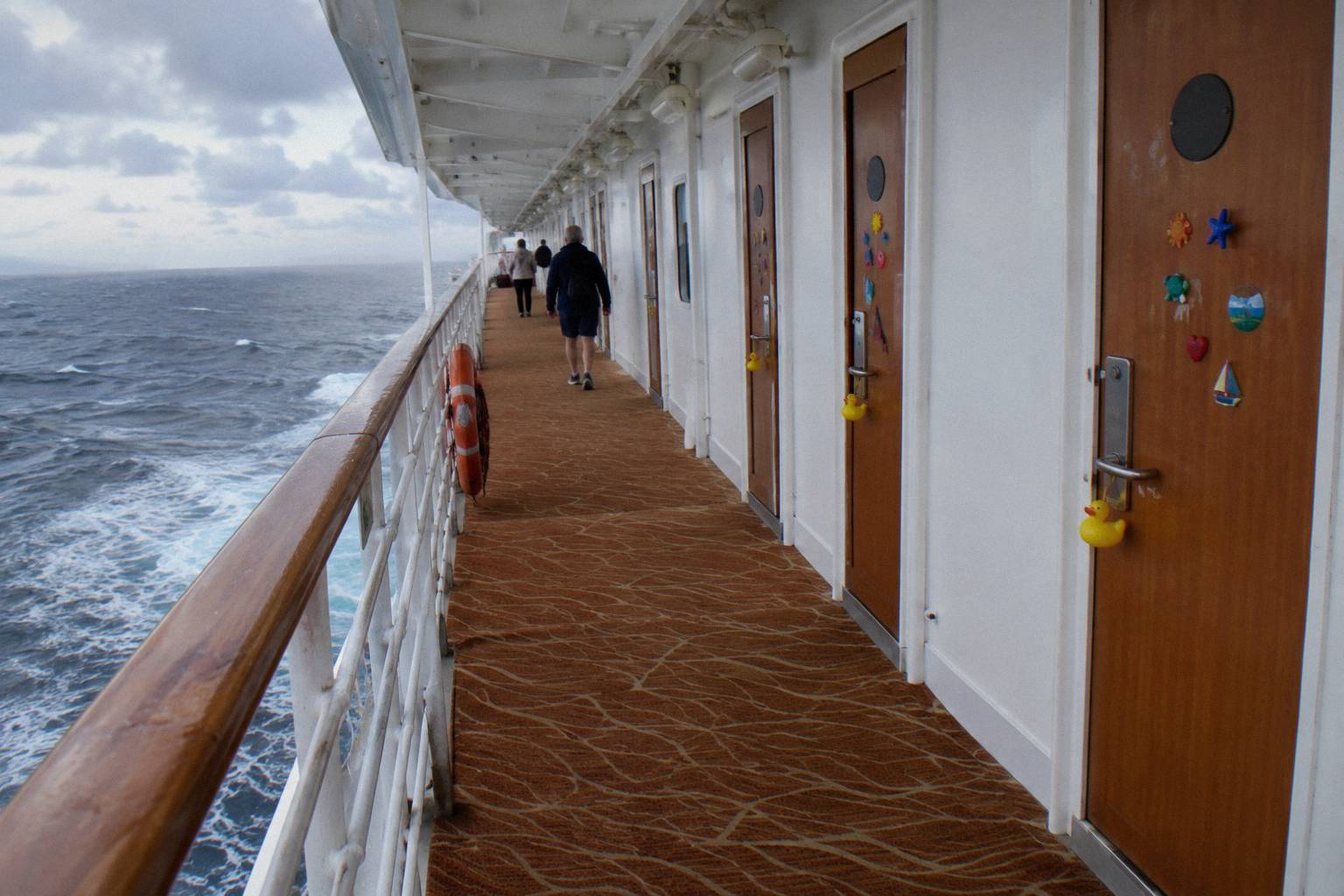
The phrase works because cruise corridors are semi-public spaces. A cabin door on a big ship faces a hallway that hundreds of people walk every day, and on a charter sailing those people are largely strangers who share one thing: they booked the same community cruise. A sign on the door is the cheapest possible broadcast. It says who is inside, who they came with, and roughly how they would like to be greeted.
The reading depends on the ship. On a mainstream sailing the sign is simply a joke, the kind of humour cruise passengers have always brought aboard. On an LGBTQ+ charter, where Gay Cruises in the community sense are the entire product, the same sign lands differently: it is a small public act of being out, and on a chartered ship it is completely unremarkable, which is exactly the point. Nobody stares at it, because half the corridor has one.
If you are weighing whether a charter sailing is the right first step, a free consultation is the quick route to matching a ship and a sailing to what you want from the corridor culture.
Where The Phrase Comes From
The sign descends from two threads of ship folklore: the emergency call "man overboard", which every crew member drills for, and the long cruise tradition of decorating cabin doors. "Wife on board" inverts the warning into a cheerful announcement. The same wordplay shows up in T-shirt slogans and magnet sets sold in cruise ports, and the door-decoration habit itself predates any LGBTQ+ charter, rooted in crews naming doors and passengers marking territory on long voyages.
Maritime language has always leaked into passenger jokes. A ship's crew treats "man overboard" as the most serious call that can be made, and passengers have long found dark-comic mileage in borrowing it for signs, party themes and door magnets. "Wife on board" sits in that lineage: it borrows the gravity of a shipboard announcement and spends it on a domestic joke. The humour is the whole payload; there is no deeper coded meaning in the words themselves.
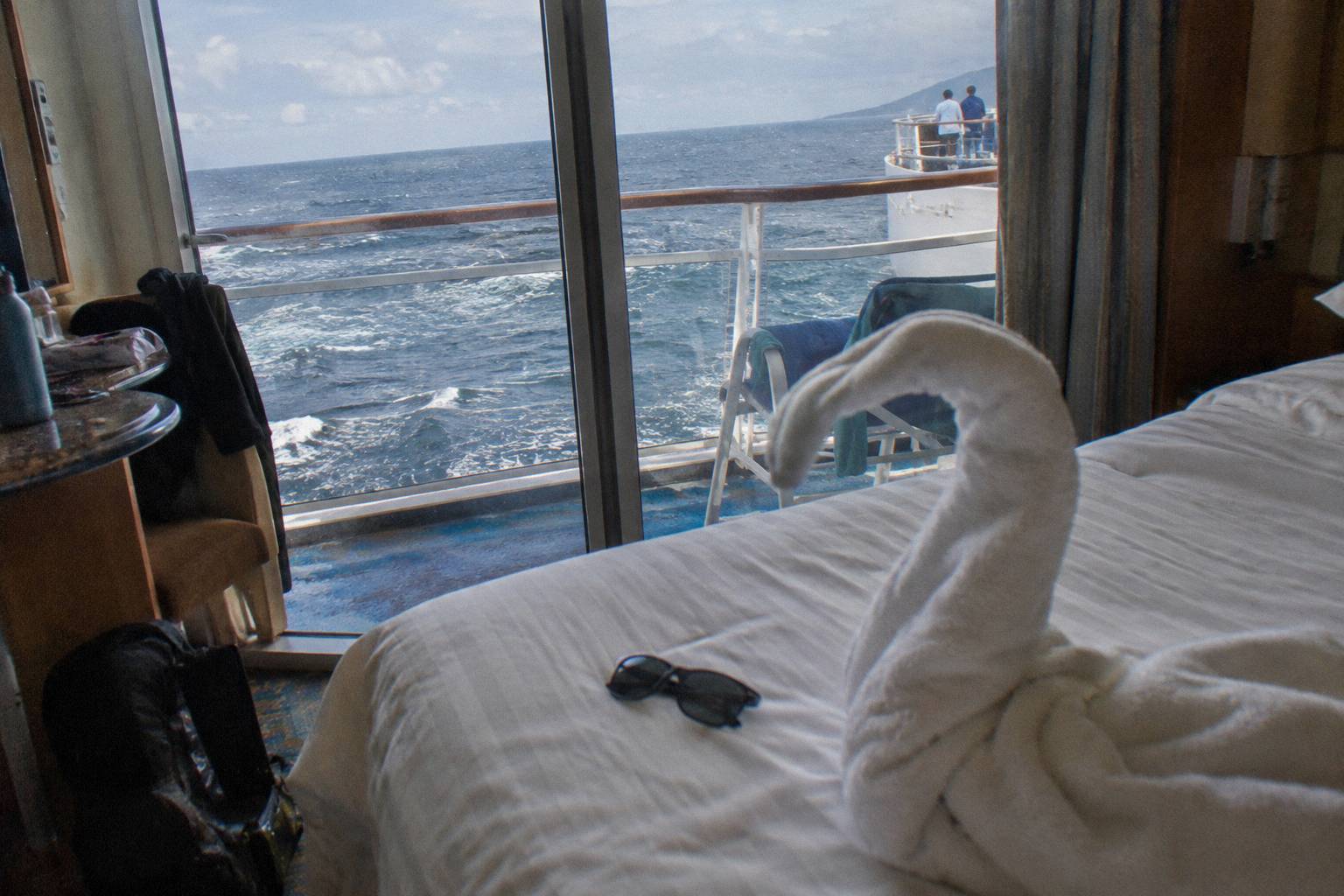
Cabin-door decoration, meanwhile, is its own tradition. Metal cabin doors take magnets, and cruise passengers have used them for decades to mark reunions, birthdays, honeymoon sailings and group trips. On a chartered LGBTQ+ sailing the practice scales up: whole decks become galleries of jokes, flags, photos and in-jokes from the community hosting the voyage. The sign is one tile in that mosaic, and the corridor reading becomes a nightly activity whether or not anyone planned it.
The habit connects to other door tokens documented on this site. The rubber duck on a cabin door handle and the pink flamingo marker, both covered in their own answers, belong to the same ecosystem of signals: small, cheap objects that say something about the people inside without requiring anyone to knock. A "wife on board" sign does the same work in words.
Who Uses The Sign On LGBTQ+ Charters
On charter sailings the sign appears across the community spectrum. Atlantis Events charters, whose audience is gay men, carry plenty of parody variants. Olivia Travel sailings, built for LGBTQ+ women, are where the literal reading is most at home. Mixed-audience operators such as VACAYA and Brand g Vacations see both. The sign is not owned by any operator or audience; it is a passenger habit each charter community picks up and adapts.
The operator rosters make clear how wide the audience spread is. Atlantis Events, founded in 1991, programmes for gay men with women welcome. Olivia Travel is the long-running name in sailings for LGBTQ+ women, with 19 announced sailings listed, from December 2026 to May 2028. VACAYA, founded in 2017, sails mixed LGBTQ+ voyages for men, women and allies. Each audience finds its own use for the same door-sign vocabulary.
The sign also does quiet work for couples on ships where they are the minority. The facts published on mainstream voyages address whether couples can hold hands or be openly gay aboard; the short version is that policies and atmospheres vary, and a separate answer covers hand-holding on a cruise ship in detail. Against that background, a door sign on a fully chartered ship is the difference between being visible by choice and being visible by default. Charter corridors are the one place in cruising where the sign is ambient rather than exceptional.
None of the operators publish rules about door signs; there is nothing on the Atlantis Events official site or the VACAYA official site about them. That silence is itself informative: the signs are so ordinary on charters that no operator has ever needed to address them. What the operators do publish is the sailing calendar, and that is what decides which corridor you will be decorating.
How Cabin Door Culture Works On A Gay Cruise
Door culture on a charter works like a slow, ship-wide conversation. Passengers decorate on embarkation day, corridors develop themes by the second night, and by mid-voyage the doors are a walking trail of jokes and identities. There is no schedule and no organiser; the charter atmosphere simply encourages it. The practical rules are the ship's own fire and safety rules, which limit what can cover a door or block a corridor, and beyond that anything goes.
The first practical note is magnetic. Most modern cabin doors are steel, so magnet-backed signs, letter sets and photo frames do the job without tape, and tape is what fire rules usually object to. A hanging sign from the door handle, the classic "wife on board" format, needs nothing more than string. Passengers who plan ahead bring the sign from home; passengers who do not will find that charter sailings develop an informal economy of spare magnets, spare ducks and spare jokes by day two.
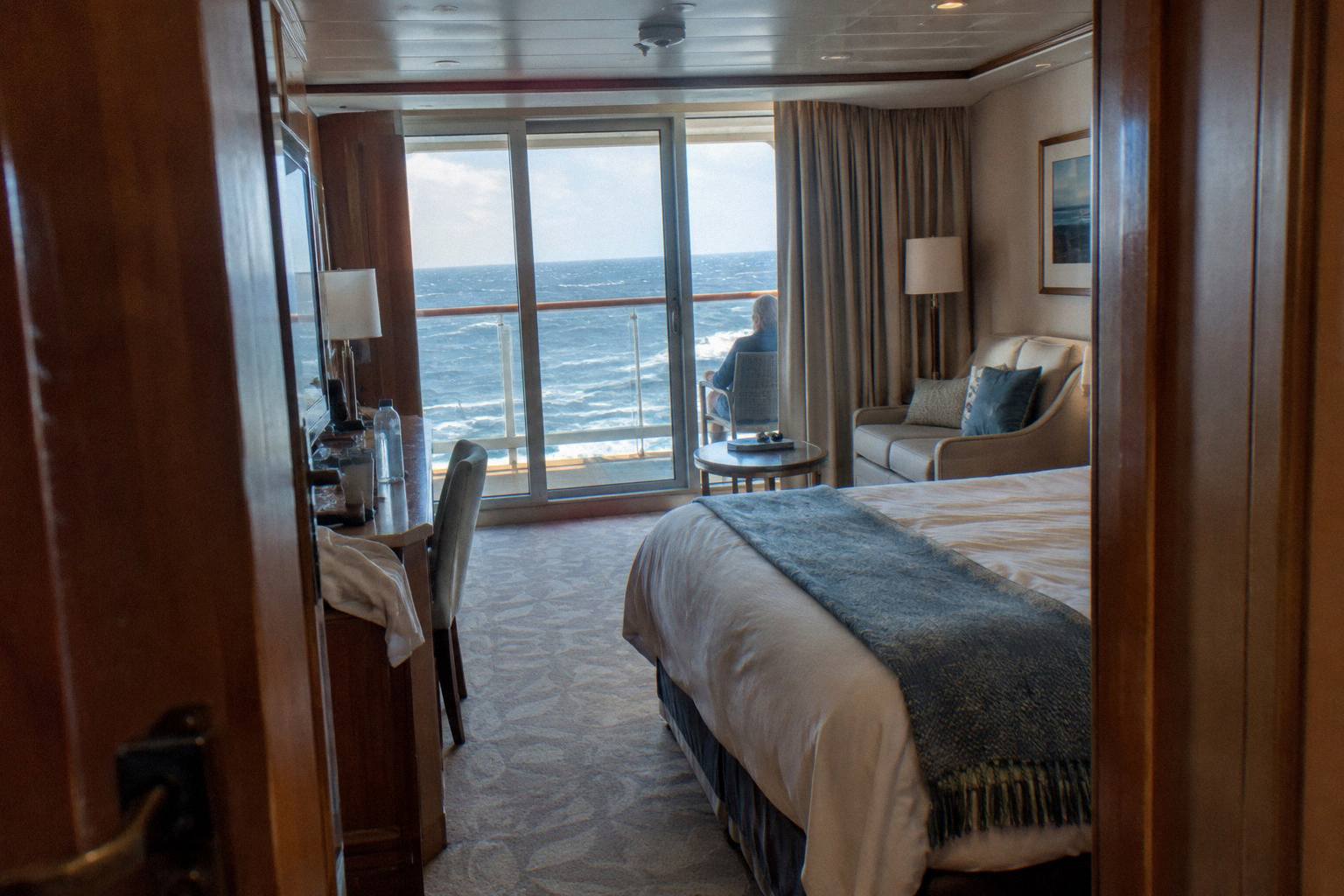
The second practical note is sociological. A door sign lowers the cost of conversation. On a 2,770-guest ship chartered end to end, such as the Virgin Voyages vessels covered here that host LGBTQ+ charters, nobody knows everyone, and a door gives strangers a pretext. This is the same mechanism behind the tokens covered in the answer about what a rubber duck on a cabin door means: a small signal that invites a hello. The "wife on board" sign simply makes the greeting more specific.
The third note is tone. Charters range from nightlife-heavy brands to luxury small-ship voyages, and door density follows. A mega-ship charter with a party programme will have fuller corridors than a 30-guest luxury river sailing, where the culture is quieter and the signs rarer. Matching the vibe to your own is a genuine booking decision, and a consultation can sort party ship from quiet ship before any money moves.
What It Costs To Sail Where The Signs Live
Charter pricing spans a wide band. Atlantis Events lists interiors from $1,199 to $1,799 per person on current 7-to-9-night sailings. VACAYA trips run from $3,719 on a Mediterranean eclipse cruise to $12,537 for Madagascar to Seychelles. Brand g Vacations spans about $4,900 on the Rhine to $22,300 for luxury Asia itineraries. The sign on the door is free; the sailing under it is the variable.
The price spread reflects what each operator charters. Atlantis charters large mainstream ships and prices from standard interior cabins, which keeps the entry point near a mainstream cruise fare. VACAYA and Brand g charter both big ships and smaller luxury vessels, and the top of the market is expedition and luxury tonnage. Out Adventures, programming for gay men and the wider LGBTQ+ community, lists $7,495 for Baja up to $22,585 for Antarctica. These are operator-listed per-person figures for the lowest cabin category, and sailing status moves constantly.
| Operator | Audience | Listed per-person price | Announced sailings after Nov 2026 |
|---|---|---|---|
| Atlantis Events | Gay men, women welcome | Interior from $1,199 to $1,799; $3,999 on sold-out Oceania Marina | 6 |
| VACAYA | Mixed LGBTQ+ | $3,719 Med eclipse to $12,537 Madagascar-Seychelles | 8 |
| Olivia Travel | LGBTQ+ women | About $999 (HAL interior) to $6,899+ | 19 |
| Brand g Vacations | Gay-centred, mixed | About $4,900 Rhine to $22,300 Asia luxury | 24 |
| Out Adventures | Gay men / LGBTQ+ | $7,495 Baja to $22,585 Antarctica | 2 |
| KelliGregg / R Family | LGBTQ+ and allies, families | KelliGregg does not publish a founding year | 13 |
The timing picture is just as decisive as the price picture, because the corridors with the strongest sign culture are on the sailings that fill first. The table below shows how the forward calendar is distributed across operators and how much of each list is already gone.
| Operator | Sailing window | Sailings listed | Sold out or waitlist |
|---|---|---|---|
| Big Gay Cruise | Nov 2026 to Feb 2028 | 6 | 0 |
| Atlantis Events | Nov 2026 to Aug 2027 | 6 | 4 |
| Olivia Travel | Dec 2026 to May 2028 | 19 | 10 |
| VACAYA | Dec 2026 to Dec 2028 | 8 | 8 |
| BearCruise | Dec 2026 to Jul 2028 | 6 | 0 |
| Brand g Vacations | Apr 2027 to Oct 2028 | 24 | 5 |
| Out Adventures | Dec 2027 to Feb 2028 | 2 | 2 |
Sold-out pressure is real. Of the 90 charter and group sailings listed across 11 operators, 29 already show sold out or waitlist, including every VACAYA trip currently listed for 2026-2028 and four of Atlantis's six future sailings. Anyone waiting for a price drop on a popular charter is often waiting for a cabin that has already gone. Asking early costs nothing, and asking for a free quote early is the standard way to hold a cabin before the corridor fills.
Which Ships Carry The Culture
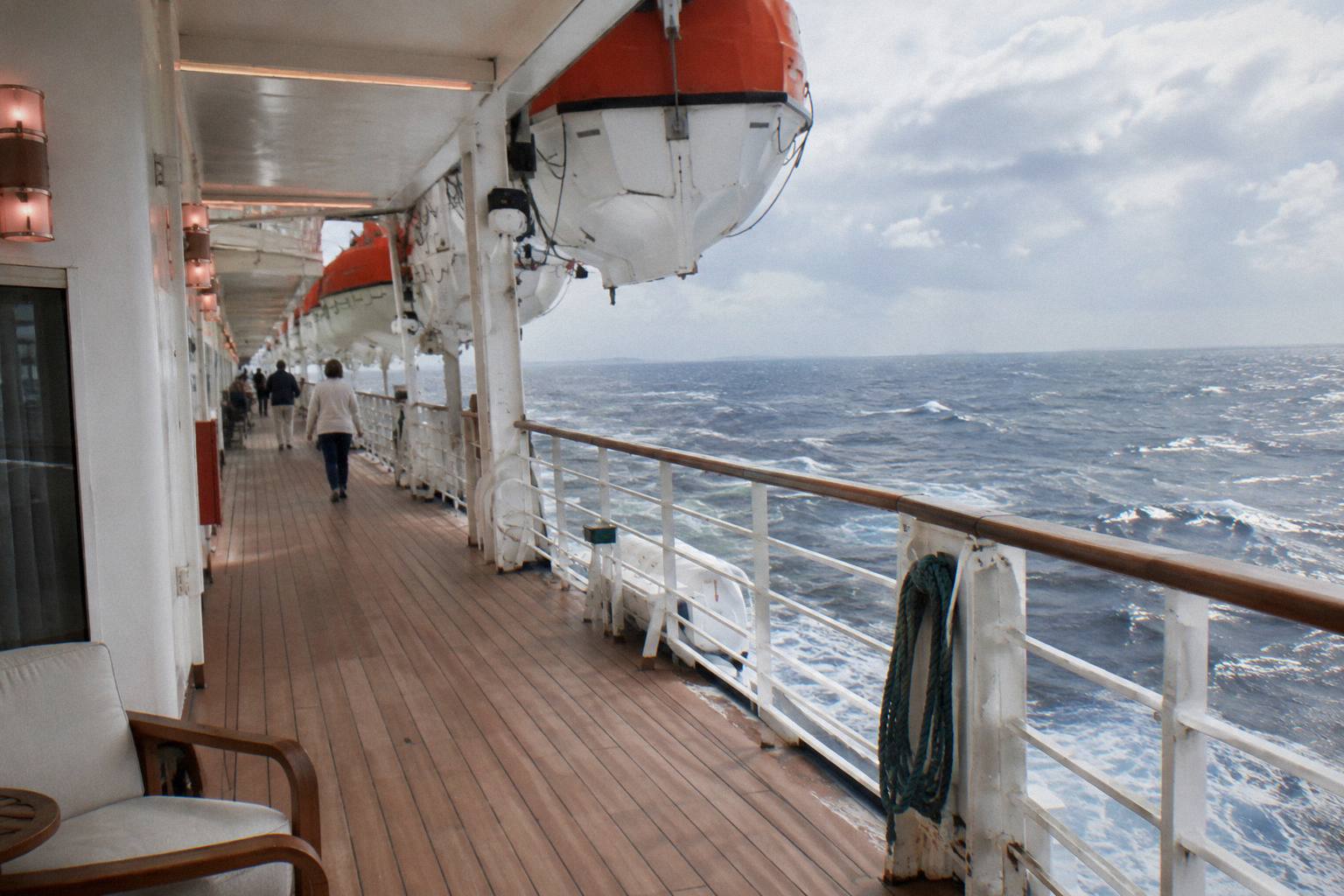
The ships hosting these charters range from 2,770-guest mega ships to small river vessels. Virgin Voyages ships such as Scarlet Lady and Valiant Lady have hosted Atlantis and other LGBTQ+ charters and carry the line's own pride programming. Atlas Ocean Voyages expedition ships sail smaller mixed charters. At the far end, Delfin III carries luxury Amazon river cruises where the corridor culture is intimate rather than raucous. The sign travels, but its volume changes with the ship.
Ship choice is really crowd-size choice. A mega-ship charter gives you thousands of doors, full production entertainment and the densest decoration culture. An expedition ship such as those in the Atlas fleet trades corridor spectacle for glaciers and Zodiacs. A river ship trades both for a small, familiar crowd by day three. The trio below sketches that spread across three very different kinds of vessel.
| Ship | Type | Guests | Built | Charter operators | Embarks from |
|---|---|---|---|---|---|
| Delfin IIIDelfin Amazon Cruises | River Ship | 44 | – | Brand g Vacations | – |
| Valiant LadyVirgin Voyages | Mega Ship | 2,770 | 2021 | Atlantis Events, BearCruise | San Juan, Barcelona |
| World NavigatorAtlas Ocean Voyages | Expedition Ship | 200 | 2021 | KelliGregg Travel / R Family Vacations | Oslo, London, Copenhagen |
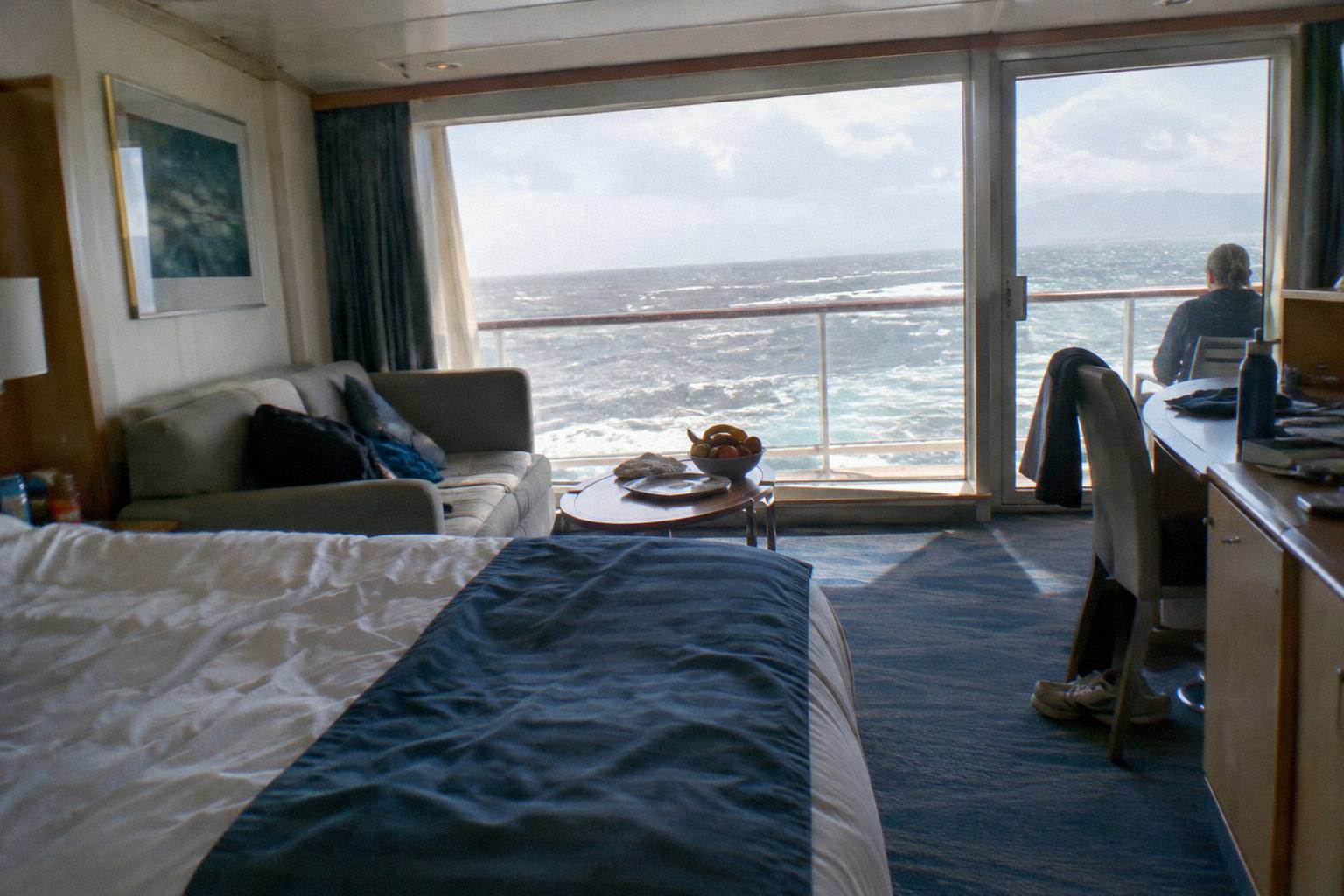
Delfin III deserves a word of its own. It is the featured ship here because it shows the far end of the spectrum: an Amazon river cruise where the audience is a few dozen suites, the corridor is short, and everyone learns every door within a day. The luxury operators that charter river tonnage, Brand g among them with its Rhine programme from about $4,900 per person, bring mixed LGBTQ+ groups to exactly this kind of intimacy. A door sign on a river ship is less broadcast than badge: fewer readers, warmer reading.
The mega-ship end is where the charter institutions live. The operators' sites show Virgin Voyages hosting multiple third-party LGBTQ+ charters across its fleet, with Atlantis's historical Scarlet Lady charter in 2020, Waves of Pride on Resilient Lady in September 2026, Sapphic Sail on Scarlet Lady for 2026-2027, and Odyssey Pride in late 2026. Virgin Voyages' own published stance is that pride is baked into its identity rather than a single-month celebration, which is about as explicit as a mainstream line gets. That combination of chartered decks and an inclusive baseline is what makes those corridors the natural habitat of the sign. Valiant Lady, one of the line's 2,770-guest ships, is the fleet-mate most often chartered for large community sailings, and its scale is the scale the door-sign culture scales best to.
What To Expect Beyond The Door Signs
A charter sailing is a full cruise product wrapped around a community: the usual dining, pools, ports and shows, plus charter-specific entertainment, theme parties and port takeovers. Waves of Pride, for instance, lists a $149-199 separate entertainment fee on top of fares that start at $1,609.40 including taxes and gratuities. Entertainment line-ups on the bigger charters are published in advance, so you can read what you are buying before you commit.
The practical differences from a mainstream cruise start at booking. Charter operators sell specific event programmes, not just cabins, so the entertainment calendar is part of the purchase. On Atlantis sailings, entertainers and theme nights are announced ahead of sailing, and the answer about entertainers on Atlantis cruises covers how those line-ups work. Pricing also differs in structure: charter fares sometimes bundle taxes and gratuities, as Waves of Pride's listed fare does, and sometimes add separate entertainment fees, so headline numbers are not directly comparable across operators.
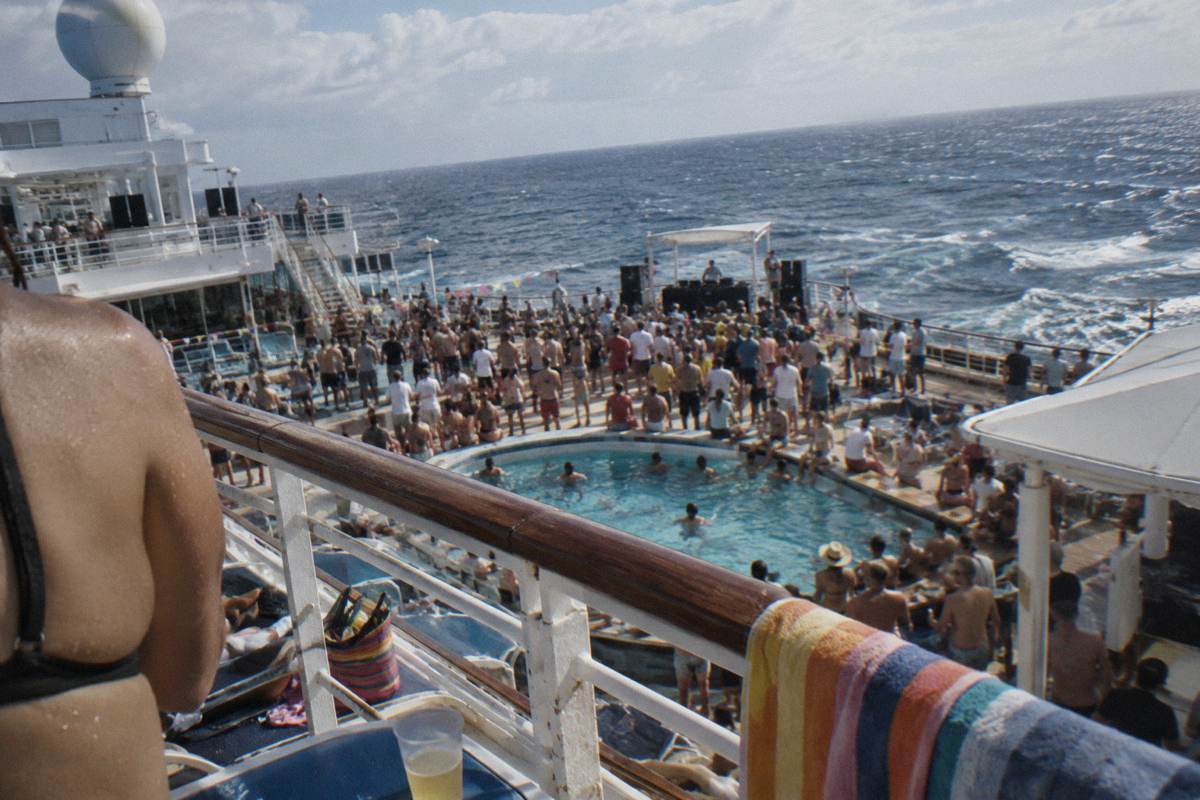
On board, the community programme fills the ship's own schedule. Themed parties, group excursions and private events turn public venues into charter venues for the week, and the door-sign culture is the quiet residential layer under all of that. Sensitive-subject programming on some charters, including clothing-optional deck areas or sex-positive events on certain brands, is published by the operators themselves in their event descriptions, and the facts on this site cover only what operators state. Reading the event list before booking is the honest way to know whether a specific sailing's atmosphere suits you.
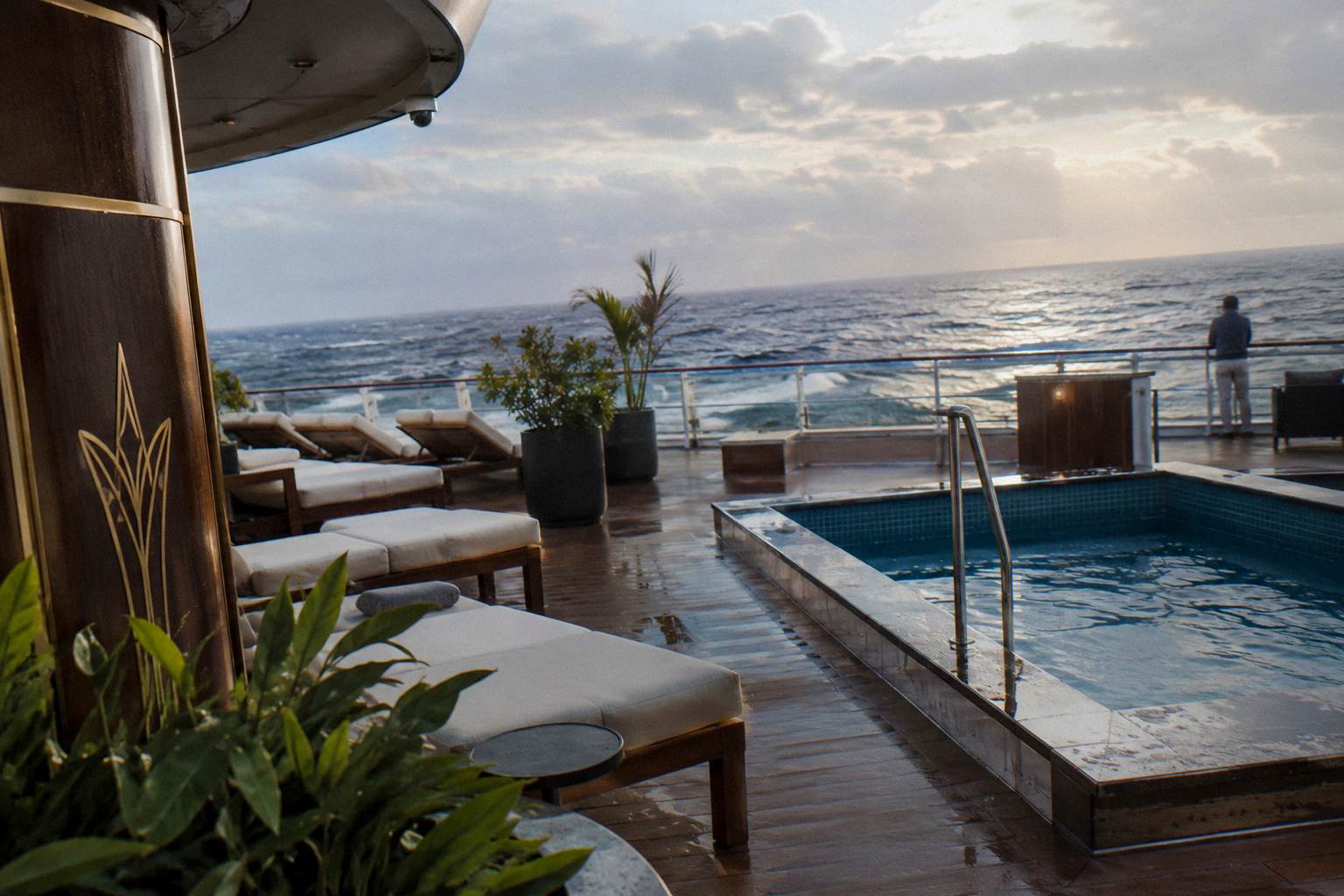
Singles programming exists too. Atlantis runs a solo-and-roommate matching option, covered in the guide to solo and roommate matching on Atlantis cruises, and families have their own operator in R Family Vacations, which includes kids' programming. The door-sign joke may be couple-shaped, but the market behind it is not: solo travellers, families and friend groups all sail these charters, and the corridor reads differently on each.
Mistakes That Trip Up First Time Charter Cruisers
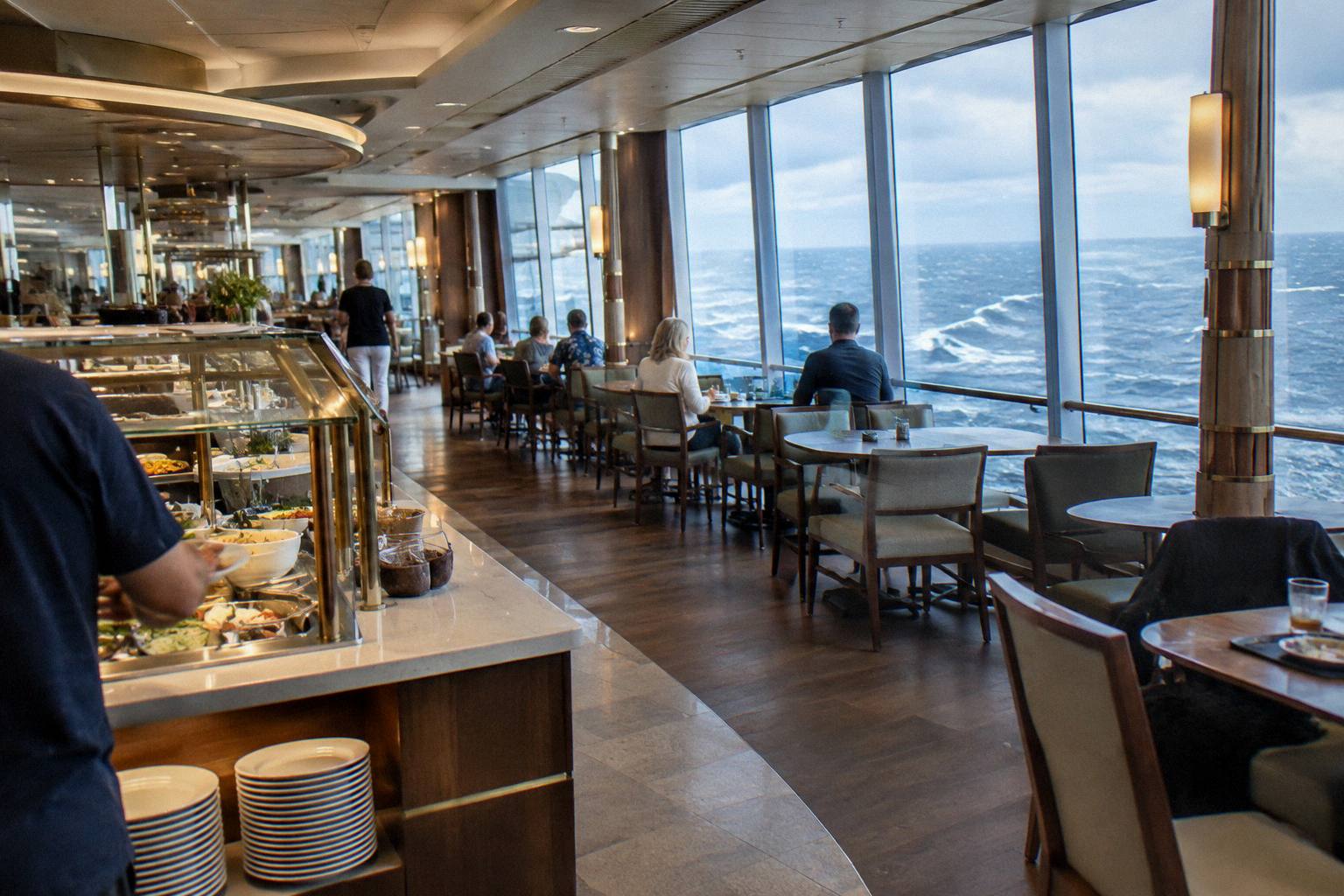
The recurring errors are booking late on sold-out-prone charters, comparing headline fares that bundle different things, choosing a ship whose crowd does not match your pace, and assuming a door sign or a duck is an official operator signal rather than passenger culture. With 29 of 90 listed sailings already sold out or waitlisted, the biggest single mistake is waiting. Each of these is avoidable with one afternoon of planning.
Booking late is structural on charters. Mainstream cabins persist; chartered cabin blocks do not, because the operator has committed to the whole ship. VACAYA's entire listed 2026-2028 calendar is already sold out, and Out Adventures' two future sailings both show sold out or waitlist. Anyone serious about a specific charter should treat the calendar, not the price page, as the binding constraint.
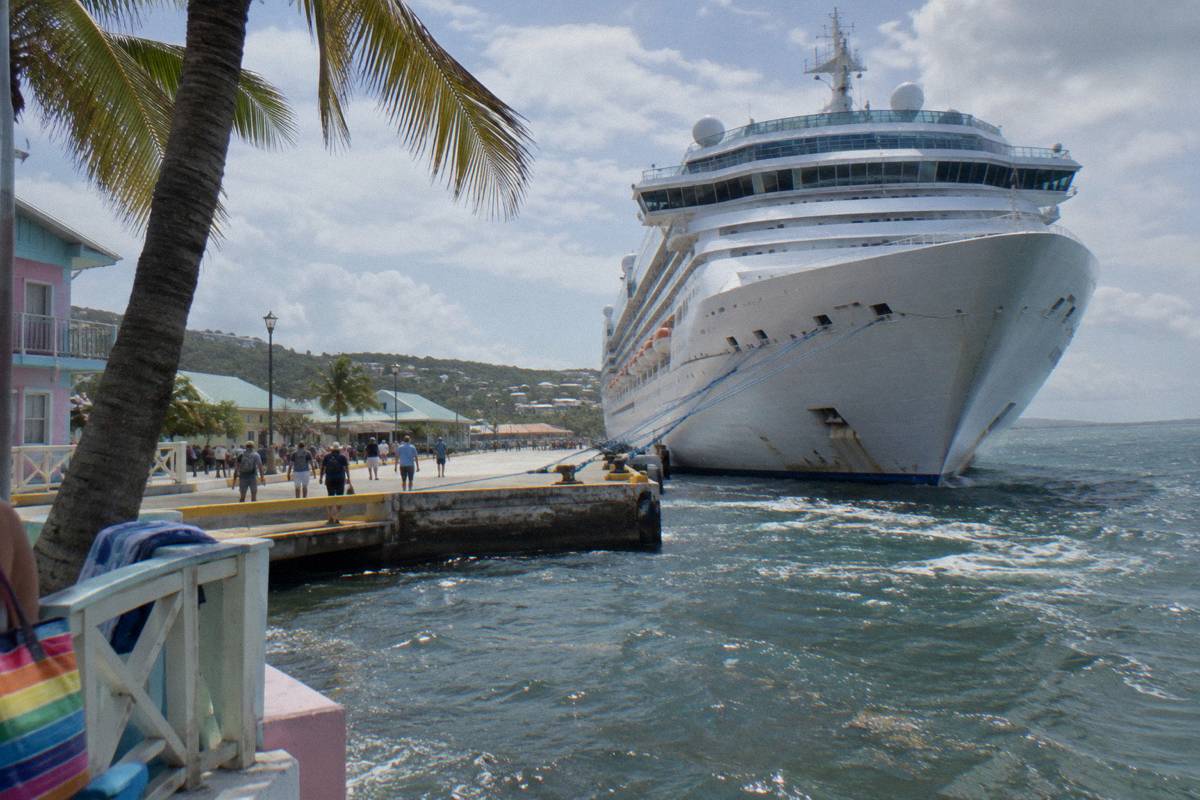
Fare comparison is the second trap. A $1,199 Atlantis interior, a $1,609.40 Waves of Pride fare that includes taxes and gratuities plus a $149-199 entertainment fee, and a $3,719 VACAYA luxury sailing are three different products wearing three different pricing conventions. Compare what the fare includes, then compare the ships, then compare the crowd. In that order.
The third mistake is reading door culture as a promise. A sign, a duck or a flamingo tells you about the passengers who brought it, not about any operator's programming, and no cruise line or charter company claims these tokens as its own. If a reader wants a guarantee of atmosphere, the honest instrument is the operator's published event list, plus a conversation with someone who knows the operators' different crowds. The RSVP Vacations official site and its peers publish what they programme; the corridor decorates itself.
Common Questions About Wife On Board On A Cruise Ship
What Does Wife On Board Mean On A Cruise Ship?
It is a cabin-door sign, a humorous inversion of the maritime warning "man overboard", announcing that a couple is sailing together. On LGBTQ+ charter sailings it also functions as a small public marker of identity and an invitation to corridor conversation. No cruise line or operator publishes rules about it; it is purely passenger culture.
Do Cruise Lines Charge For Or Regulate Door Signs?
No operator listed mentions door signs at all, which reflects how ordinary they are. The only constraints that exist are the ship's own safety rules, which generally favour magnets over adhesives and prohibit anything blocking a corridor or covering safety equipment. Fire-safety rules on cabin doors are the one genuine limit.
Is The Sign Only Used On Gay Charters?
No. Door decoration is a general cruise tradition, and couples on mainstream sailings hang joke signs too. It is simply denser and more socially loaded on LGBTQ+ charters, where an entire chartered ship shares the context and the sign becomes ambient rather than exceptional.
What Other Door Signals Appear On LGBTQ+ Cruises?
Rubber ducks on cabin-door handles and pink flamingo markers are the two best-documented companions, both covered in their own answers on this site. Like the sign, they are low-cost passenger signals that invite conversation rather than official operator tokens.
Which Sailings Have The Strongest Door Culture?
Density follows crowd size and party programming: full-ship mega-ship charters, such as the Virgin Voyages vessels hosting multiple LGBTQ+ charters, see the fullest corridors. Smaller expedition and river sailings, like Delfin III on the Amazon, have quieter, more intimate door culture where everyone knows every cabin within days.
How Much Does A Charter Sailing Where This Culture Thrives Cost?
Operator-listed per-person fares span Atlantis interiors from $1,199 to $1,799 on current sailings, Olivia from about $999, VACAYA from $3,719 to $12,537, and Out Adventures up to $22,585 for Antarctica. Fares bundle different things, so compare inclusions first. A free consultation can map the options to a budget with no obligation.
More Questions Answered
 Straight On A Gay CruiseWho is actually welcome on a gay cruise, operator by operator, and how to be a good ally guest.Read the answer
 What Happens On BoardThe rundown of a gay cruise: who sails, what a day looks like, costs and rules.Read the answer
 Average Age On BoardNo operator publishes a passenger age average; audience, price and itinerary reveal who each sailing actually draws.Read the answer
 Gay Passenger NumbersWhich ships actually carry the most gay passengers? Charter capacity, not demographics, holds the answer.Read the answer